Showing posts with label Aging. Show all posts

Saturday, May 22, 2021

Reflections on the passing of Alix Dobkin

 When news of Alx Dobkin’s stroke and immanent death broke last week, I felt a twinge of guilt before recognizing my sorrow and sense of immanent loss. As I thought of her occasionally during recent years, the first memory to pop up was an uncomfortable conversation with her at a conference over a political disagreement several years ago. In the face of death, the great equalizer, all disagreements seem trivial, and I suddenly felt it was churlish and a waste of time to even remember it. What’s worth remembering are the gifts she had in her life and the difference she made in mine. 

Alix, who died at 80, was a pioneer of what became “women’s music", a genre she helped birth in the early 70s. It was a genre that celebrated women’s autonomy, our right to love and make love with each other and our proud membership in what was called the second wave of feminism. With Kay Gardner and other lesbian-feminist musicians, she recorded the first recorded album of lesbian music: Lavender Jane Loves Women in 1973.  Then no mainstream recording label would touch an album by an artist who only wanted to perform for women, so Alix formed her own record company, Women’s Wax Works. It was a breakthrough album for lesbian-feminists seeking a sound track to our lives. 

Alix was already a celebrity of sorts, having played with Bob Dylan and other early folk greats of the 60s. At one point, her obituary in The Washington Post notes, she reportedly turned down the chance to record one of his songs. She married and had a daughter, but later separated from her husband and made a major life change. The catalyst was a radio interview with British feminist Germaine Greer, one of many consciousness raising events that marked that period. She took her daughter, partnered with a female lover, Liza Cowan, and took a new turn in music and toward lesbian-feminist organizing.

I remember playing songs from Lavender Jane in the Chicago apartment I shared with five other women in the early 70s. We lived collectively and felt we were part of something new. I had just quit my first job, writing for The Lerner Newspapers, and was searching for something that I hadn’t quite defined yet. I had been volunteering with the Emma Goldman Women’s Health Collective, which was trying to help women navigate a sexist health system and get good screening and counseling services for their reproductive needs. In the larger culture women were questioning whether the traditional career path of marriage and children was the only way to go—or whether it was wise at all in an often-oppressive culture  “I am a woman giving birth to herself” was the phrase on a poster, one of many aimed at women’s autonomy in that era. Alix’ s song “The Woman in your Life is You”, resonated with me and so many other women I know or once knew. I realized after her death was announced this week that the feelings of sorrow I had came not only from the end of a fine woman’s life, but also losses in mine: a person who was familiar to me over half a century, a reminder of my youth, and part of what seems a stream of losses as I age. 

At 74, I confess that I am a regular reader of obituaries—not out of a morbid search for who’s dying at a younger age than mine. Rather it’s because obits have become a kind of art form, the ultimate short story of the arc of someone’s life. In papers like The Washington Post, the writer is aware that readers want to know the deceased ’s contributions to the larger culture—a new invention or contribution to some field. In Alix’s obit in The Post, she was identified as the source of a meme that resonates in our time: ”The future is female”. Her lover, Liza Cowan, photographed her wearing a T-shirt with that phrase, and decades later it was echoed by Hillary Clinton and young feminists empowered in ways Alix could only hope for in her and my youth. It made me laugh, as I had not even been aware of the origin of the meme in the years since I first heard her songs.

Social media posts by friends and admirers focus on her music, and a tribute from Liza, her lover in those early days, told more of the story. Alix “called on her roots in folk music, Broadway musicals, and Balkan songs…based on storytelling.” Her confidence came early, “from a loving Jewish family in Philadelphia”, members for a time in The Communist Party, “and  she spent her early years listening to the music of Paul Robeson—who once visited her family—Pete and Peggy Seeger, Leadbelly, The Red Army Chorus” and others. There, Liza writes, “she gained a passion for civil rights and storytelling.” She later published a biography of her young years as a “red-diaper baby”.

Alix recorded 5 more albums after Lavender Jane and toured various countries, always performing for women. As she aged, she remained a performer and organizer, especially with Old Lesbians Organizing for Change (OLOC). In the last half of her life, Liza writes, she lived in Woodstock, New York, raising her daughter along with former husband Sam, leaving only to tour. And in her last years, performing took a back seat to helping care for her three beloved grandkids. This recent photo was taken in Woodstock.

Alix, like all of us, had many influences in her life, and no doubt she made decisions she either regretted or wished she had handled differently. Our uncomfortable discussion at the 2016 OLOC gathering revolved around the steering committee’s decision to disallow a Native American drumming circle from performing at the event because the group included men. The drummers had been invited by the guest speaker, a Native American poet, who later called out the conference for racism during her address. As an attendee, I felt embarrassed and angry. When I asked whether the issue would be discussed, Alix responded with a vague answer: it could be brought up at the Sunday finale. I did not follow through with that, leaving the gathering with the feeling that such a lesbian separatist stance, perhaps appropriate in the second wave’s early feminist days, was clearly inappropriate in the present. Perhaps Alix later re-evaluated that decision as both OLOC and the white-majority culture began to deal seriously with racism in following years. Like many, I have a tendency to freeze my ideological opponents in the past. 

Alix contributed much to music, lesbian-feminism and to those who loved her. Looking at the arc of her 80 years, it seems to me that she expanded more than she rejected the traditional family. She and her ex-husband Sam both raised their daughter, Adrian, for years. At the end her daughter  and son-in-law were with her, and lesbians around the world kept vigil online and perhaps in person. Obituaries select sections of a life to make a short story for the news. As we know intuitively, we all deserve a novel. If our lives end with the love and admiration Alix experienced, we will definitely be fortunate.


Tuesday, February 4, 2020

On turning 73 and greeting a new lunar year

Yesterday I turned 73, a number that was once quite inconceivable but not anymore. Like a number of friends in my generation, I prepare for my upcoming new age at least 6 months early--not unlike my childhood behavior: "I'm 8! Ok, I'm 7-1/2, almost 8!" Three of my friends have just turned 70, going through the shock of entering a new decade. I'm probably a little smug in thinking I'm well past that--still several years away from my next decade shock at 80. "If I make it," I whisper to myself, as if just saying that will appease the luck gods into letting me continue to savor this wonderful gift of life.

And then again, I'm lucky to be able to put age in perspective.  I live in a senior building, where I occasionally join neighbors in our optional one-menu-per-day dinner program. Last Friday, I chatted with Joan, who is in her early 90s, and Jeree, perhaps in her mid-80s. They asked me how old I would be on Monday (monthly birthdays are posted in our elevators). When I answered, they smiled with a look of nostalgia in their eyes. Oh, yes, I remember 73....

I moved into this community of mostly-retired over 62-year-olds nearly four years ago, and have not regretted it for a minute since then. It's independent living with many opportunities for socializing or simply enjoying life in a vintage but well-managed building (sort of like my body, I like to think). It's centrally located in Denver, next to City Park with its many trees, twice as many Canada geese,  a small lake, a couple of ponds. I spent a good part of my birthday gazing at the park from my 11th floor window and enjoying birthday greetings, written or spoken, from neighbors and friends. I did venture out into the falling snow at midday to meet friends in my laughter yoga group for a celebration and well, lots of laughter.

I didn't mark the occasion with a photo, so I took a few selfies today, marking varying reactions to being 73. So here I am, posing in front of a wood framed photo and card exhibit in my living room.


Yes--surprise, acceptance, laughter at the joy of having made it this far. I'm continuing to celebrate all week. Why not? A filmed version of The Met's Porgy and Bess tomorrow with an opera-loving friend; a Friday women's salon where we talk about a variety of topics relating to life, love, imagination or survival, one each month; another monthly meeting (OLOC, an aging support group), a dress rehearsal for a Valentine's Day dinner concert of The Sage Singers (my first chorus!). Today I'll miss dancing with the new class of square dancers in The  Rainbeaus, due to reluctance to driving on icy streets, but will catch up with one of their always-celebratory events soon.

This year my birthday coincides with the lunar new year, a period of two weeks which began Jan. 25. I plan to mark the occasion Thursday with a dim sum lunch at one of Denver's best (as in tasty) Chinese restaurants with several long-time friends. Although Japan celebrates the new year on Jan. 1, like most Western countries, I always felt during the years I lived there that the lunar holiday was a far more suitable time. At certain latitudes (e.g. Tokyo), the first hints of spring are already apparent. The plum blossoms emerging, a few green shoots poking through the soil. Also, the lunar holiday feels like a kind of second start. Still feels that way--a decade after I left Asia. So for you, dear readers, whether or not your January 1 new year started out well or not, happy new year to you! Especially to those of you who may have already broken a new year resolution. (It's not too late to begin again.)  We are starting the Year of the Rat (or mouse if you prefer), supposedly an auspicious year, as rodents proliferate when harvests are bountiful. Unless, as a Chinese friend informs me, you were born in such a year (coming around in 12-year cycles). In that case, you will have some challenges.

My challenge lunar year was 2019 (The Year of the Wild Boar), the year I experienced a stress fracture in one toe--and a lesson in how one small thing can impact activities for weeks. Other challenges: replacing my passport, stolen after a careless moment, and paying a big repair bill for body damage to my aging car, done in a not-mindful moment. Otherwise, it was quite a fortunate year: continuing love from people I love, several reunions--one in Germany and Poland with 2 special friends from Tamagawa University days. Other first get-togethers in a long time came in Chicago and environs with relatives in the Bogdanski family (my mother's side), and another with my first boyfriend, Phil, who I had not seen in nearly 50 years. And then treasured yearly reunions with my sister and brother-in-law, Joan and Jim, the Orozco clan, and old friends from my youthful life in Chicago. And then there was treasured time in rural Colorado at my tiny house in Florissant, still nestled on the property of my long-time friend, Linda. Only a few weeks there, due to being sidelined with my broken toe, but precious all the same.

And now a new year of life and new lunar year begins, so last year's memories will blend into the new ones created. And hopefully new actions--dare I say, accomplishments? My prime goal is to do everything I can to help Democrats win in November and end this years-long nightmare on Pennsylvania Avenue, as well as my intermittent despair over it all. Among other things, I'm eyeing organizing some weekly sessions with neighbors and friends to write postcards to voters in flippable districts. See Postcards to Voters for more information on that. Another prime goal: to be a good friend to my friends and family, especially those with health challenges. Other less urgent goals: to continue the Essentrics exercise program I'm doing with neighbors every week. And of course to write more entries in this blog. And in general being mindful all the time and especially with passports and cars. May each of you reach your goals this year too.

Saturday, December 30, 2017

The crumbs of one woman's year: 2017

"Slung as though in a hammock, or a lull, between one Christmas forever over and  a New Year nearing full of relentless surprises, waywardly and gladly I pry back at those wizening 12 months and see only a waltzing snippet of those topsy-turvy times, flickers of vistas, flashes of queer fishes, patches and chequers of a bard’s eye view….

‘Look back, back, the big voices clarion, look back at the black, colossal year,’ while the rich music fanfares….(but) I can give you only a scattering of some of the crumbs of one man’s year, and the penny music whistles."  —Dylan Thomas in The Crumbs of One Man’s Year

Sitting here in front of my window this warming morning, in this lull between Christmas and New Year’s Day, I see the last melting patches of snow in City Park, as I try to channel Dylan Thomas. I think I have. Though the news feeds are full of “best of’s” and “most importants” of 2017, I sit back and see, as Thomas did, a few “waltzing snippets” that stay in memory. Start with a memory, any memory will do.

I’m near Mudbiscuit, my cabin in Florissant, one June morning, walking down Ranger Station Road with Linda and her two dogs, Belle the Border Collie and Hop the Corgi, breathing the crisp, high altitude air, grateful that I can still return to this beautiful place every summer. I’m watching the dogs, sniffing the history of the night with the focus of a rookie detective. I’m distracted by Hop’s butt, long white and gold hair swaying in the wind. An icon of my country life, like the hummingbird feeders, always my first task when I arrive to open the cabin, filled with a vague anxiety that these tiny birds, having made their home in a nearby cottonwood tree, altitude 8,800 feet, will not survive if I stop providing a daily ration of sugar water. Here's Hop and Belle with their human, Linda, that morning.


Then it’s  time to check the greenhouse. Linda planted early and the greens are thriving. Sunlight on the red-stemmed chard, the park choi, lettuce and peas. Back to the cabin to wash, chop, serve, eat. The day passes: I putter, read, answer email, all a blur until the sky colors change, the great magnificent sky, that surprises me every season I return after being away.


Is it any wonder that the Japanese word for nostalgia, natsukashii, has the root, natsu or summer—where memories wander first? But I have winter memories too, this winter of our resistance following the 2016 upset and deeply upsetting presidential election in the US. So many of us then were frightened, disoriented, still disbelieving.

Jump to Jan. 21, the day after the inauguration of the Divider in Chief, and I’m about to join thousands of Coloradans at the Denver Civic Center for the Women’s March. We don’t know yet that it will become the largest protest in US history, with nearly 5 million taking part around the globe. It’s early, I’m anxious, as full buses pass us at the stop near home. A neighbor gives us a lift and within the half hour we’re walking toward the 16th Street Mall. Then I see it—a steady stream of pussy-hatted women, men pushing strollers, kids, a stream of signs, and I can feel the energy and anticipation of the day. I’ll soon see many more that day. But it’s that first glimpse, as the sun appeared over the heads of those early arrivals, that brought both a thrill and sense of relief. We’re all in this together….

A season of protests reminding us of our unity across race, gender, class and generations. On Valentine’s Day, also known as V-Day--observed by the global activist movement to end gender violence--I was again on the Mall with friends and celebrants, dancers, chanters, and speakers--all pledging to work for justice. Images of red and movement and words, but the image that stays is this one of the young STEM women, remembered partly because I learned what STEM meant that day. We’re all in this together....


The year moved into spring, and I see more images of actions: The silent procession around the State Capitol on International Women’s Day, Climate Action on Earth Day, also a March for Science, notable for its creative signs and the youth of many of the participants. A march and rally in support of “our Muslim neighbors”. In my senior building here in the city, we’re writing postcards to our representatives. Having just moved in the previous October, I’m getting to know my neighbors. So much to resist and encourage. Yes, we’re all in this together….

Delicious moments—cooking being the most ephemeral art, its appreciators also its destroyers. Sitting at a long table at The Mercury Cafe with dear friends on my birthday, eating a pagan vegan plate (greens, tofu, veggie green chili, fried cornmeal), perhaps my 100th plate of it, the menu item I order there  most often….An exquisitely expertly-prepared plate of sushi, a birthday gift from a friend, at Denver’s premier sushi restaurant….Another dinner treat from visiting friends in August at a local artisan restaurant, probably my prettiest food picture of the year.


Summer also brought disillusionment. I watched the Rachel Maddow Show nearly every evening with country or city friends, the stories flowing by, marking the damage this hobbled and flawed democracy brought about by electing the current president and Congress. Then one evening, I was sitting with neighbors in the lobby of my apartment building, not distracted by the slivers of visible sunset, and realizing that there can be no giving up. Maybe it was after 45’s insulting speech at The Boy Scout Jamboree or after his refusal to support more safety measures for football players, saying they  would ruin the game. Not the worst he had done, but the gratuitous cruelty and ignorance struck me viscerally. Remembering, I feel again that shiver of fear, then a calmness, a resolve. We simply cannot give up. Elections are coming in 2018. We’re all in this together….

Moments of joy: that’s what my laughter yoga friends call those moments when we look around us, fully present in the beauty that presents itself, perhaps always there if we just bother to notice. Burying my face in a blossoming tree in City Park across the street from me here in Denver; handing out water bottles to exhausted and grateful marathon runners in City Park, probably my most rewarding volunteer experience.


In October, gazing at a sea of student faces at Metro State University. I was on a panel with 5 other women who had worked on Big Mama Rag, a feminist newspaper published in Denver in the 1970s--more than 40 years ago. We were talking to students in the women's studies department, telling them so many important things--about our passion, our mistakes, what we tried to do and what still needs doing. I remember the expression of the transgender youth in the 2nd row who was really listening, as many others listened impassively or took notes; never doubt the importance of the audience's role in a presentation. We hoped they were listening too--not enough time for Q & A before their next class. Afterwards, as we panelists sat around a table in the student center, I remember a relaxed pleasure and pride: remembering this time we shared and our gratitude for being a part of what is now history!

Death made itself visible to me this year, not exactly a next door neighbor, but more like a silent and solemn newcomer who has moved in down the block. In the spring two women died, members of one of my groups (OLOC), one suddenly and one from cancer. Both were honored at one of our monthly meetings in a ceremony led by another member--who herself passed away later in the year from cancer. In early March a former neighbor turned friend—Joanne, age 85—died from complications of cancer and an accident. A day earlier, Gerry Starbuck, my first employer in Denver in 1977, passed away. Later, a good friend from my days in Japan, Kim Oswalt, passed away. Not long afterwards I was telling a neighbor about these deaths. “ It will be more and more like this,” she told me matter-of-factly but not without sympathy. She didn’t need to explain how aging brings knowledge--the sense of one’s own vulnerability accompanied by increasing losses. The image I call up most often is the one below from the Day of the Dead exhibit and celebration at the Denver Botanic Gardens in early November. I paused for several moments before this altar where the artist explained her story and art to a group of children. In the past few years I’ve seen this holiday grow beyond its Mexican roots into a developing North American holiday, with numerous events around town. We need it to recognize the role of death in human life and honor the lives of those no longer with us.


Moments of auditory joy: sitting on the stage of the Grant Park Orchestra in Chicago, listening to a young woman play Bach’s cello suite No. 5 on her viola, the lights of Millennium Park behind her.
The Sound Circle a cappella chorus, singing beneath the stained glass windows of a Boulder church.

This fading year of 2017 will always be the year I discovered song. In September I joined my first flash mob where more than 100 of us sang Holly Near’s "Singing for Our Lives", as we peeled off jackets to the surprise of onlookers at the DCPA. Yet the scene that returns is the short concert we gave on the Mall afterwards, becoming celebrities of the hour to passersby. One solitary older man caught my eye, watching silently and then finally, slowly joining in on a song. World Singing Day came a month later, and I was there, on the Pearl Street Mall in Boulder, where anyone who came by got a lyric booklet with tunes ranging from "Uptown Funk" to "Imagine", and where we sang our hearts out, in one big outdoor karaoke session. Instead of an electronic screen, we had various small choirs lead us, and instead of a room, the sunny, chilly outdoors. In December I was back on the 16th Street Mall in Denver, singing “alternative lyrics” to popular Christmas carols, all aimed at mocking the GOP tax bill, It  passed the Senate the following day, unfortunately, but the singing helped sooth and energize.  I think we’re on to something as we head into Resistance Year #2.

And then Christmas and the company of friends, and some slow easy days with time for reflection.

“And one man’s year is like the country of a cloud, mapped on the sky, that soon will vanish into the watery, ordered wastes, intro the spinning rule, into the dark which is light.” —Dylan Thomas


Thursday, July 21, 2016

Older Self and Younger Self have another chat about politics

Now that Bernie Sanders' presidential bid has ended, Older Self and Younger Self are able to sit down  for a real conversation about the coming election. Coming of age in the late Sixties, Younger Self has decided to stay in this century for awhile to see if she can make herself useful. I conjure her sitting next to me, wondering how she might have turned out differently had she been a Millennial instead of a Boomer: a tattoo perhaps or a shock of blue hair.... I digress. Actually, when she first visited the 21st Century,  it took her awhile to get over her shock of seeing how things turned out, nearly 50 years after she first volunteered for Eugene McCarthy in 1968. Surely Power would have returned to the People by now, and the People, now United, would never have been Defeated. Putting aside her huge disappointment in the state of political affairs in 2016, she immediately plunged into working for Bernie's campaign. She still is working for Bernie, having signed up for Our Revolution, which is working to elect candidates committed to Sanders' progressive values.

Younger Self might vote for Hillary ("Another Hubert Humphrey!) Older Self will definitely vote for Hillary. Our enthusiasm levels are considerably different, and Older Self has yet to convince her that Hillary will be a far better president than she expects--provided the electorate really gets behind progressive candidates running for Congress. However, today our conversation is not about Hillary, but rather about Trump. We both agree on the threat Trump's campaign poses to the US and the world, but our emphasis differs.

Younger Self's political science courses have convinced her it's all a matter of strategy and getting out the vote. Trump is just another George Wallace, the segregationist Alabama governor who carried 5 Southern states in 1968. She dismisses my preoccupation with trying to understand how we got to this place or just what motivates Trump supporters. "They're either idiots or people who have never even heard the phrase 'unexamined racism'", she insists. "They're marginal. We're creating a new future. Let's just get down to work--get out the vote, show that the people can act!"

Older Self remembers that she too once thought of herself as a person whose actions--combined with those of others, of course--made a Significant Difference. Older Self seems less sure of anything these days, haunted by memories of unintended consequences of yesterday's decisive actions and victories. Still, Older Self agrees, we must act, always with insufficient information or insight, hopeful we're making the right choice. Understanding why others feel differently seems key, however.

Today, Older Self read what she considers a brilliant and incisive article in The Guardian. The author is Dave Eggers, a writer and reporter who covered a Trump rally in Sacramento, California, in June. You can read it here. Eggers, posing as a participant, found the supporters he met to a be a diverse and courteous bunch attending an event as "as peaceful and patriotic as a Fourth of July picnic". Still, he was left with a number of questions, including: (W)hy is it that the song Trump’s campaign uses to mark his arrival and departure is Elton John’s “Tiny Dancer?” Is it more troubling, or less troubling, knowing that no one in the audience really cares what he says? And could it be that because Trump’s supporters are not all drawn from the lunatic fringe, but in fact represent a broad cross-section of regular people, and far more women than would seem possible or rational, that he could actually win?"

Older Self shows the article to Younger Self, and the result is impatience: "Who cares about the song?  Instead of worrying about whether or not he can win, let's get on with a counter-offensive!" Older Self decides this is the time to tell her of some of the changes in getting out the vote since she went to Wisconsin in '68 to make calls for McCarthy: "No one answers their phone anymore; calls are screened, and for that matter, no one comes to the door during campaign season. Too many door-knockers. Some say it's all about social media these days." Older Self takes a deep breath and starts to explain social media. Unnecessary, it turns out, as Younger Self has already opened a Facebook account and joined Twitter. All she needs now are friends who think differently from how she does.

Older Self pulls out another article--another one of the three articles that have helped her understand the Trump phenomenon. Trump Days: Up Close with the candidate and his crowds, by George Saunders, appeared in the July 11 New Yorker. Read it here. Lots of insights in this one, including Saunders' analysis of what he calls RightLand and LeftLand. Essentially, people on the political Right and Left have no common ground, and that's what makes communication challenging at best. "In the old days," Saunders writes, "a liberal ad a conservative (a "dove" and a "hawk", say) got their data from one of three nightly news programs, a local paper and a handful of national magazines, and were thus starting with the same basic facts (even if those facts were questionable, limited, or erroneous). Now each of us constructs a custom informational universe, wittingly (we choose to go to the sources that uphold our existing beliefs and thus flatter us) or unwittingly (our app algorithms do the driving for us). The data we get this way, pre-imprinted with spin and mythos, are intensely one-dimensional." Younger Self stares at Older Self: "I have no idea what you're talking about."

Older Self  decides not to mention the concept of "frames", the concept that all of us filter "reality" through a set of experiences/beliefs/biases. (UPDATE: For an excellent discussion of this, see this article by the linguist who introduced the concept of frames in his widely-read book Don't Think of an Elephant.) We see the same things, yet come up with radically different interpretations. Older Self bites her tongue, hesitating to remind Younger Self of all the debates/arguments she had with Dad, a youthful socialist turned Wallace supporter, debates full of sound and fury, yet ultimately changing neither of our beliefs or votes.


There's one more article I'd like you to see, Older Self says. It's called How American Politics Went Insane, and it appeared in the July/August issue of The Atlantic. Here's the link. Among other things, it argues that political parties played an important role in vetting candidates and that the trend to diminishing their power, in favor of direct democracy, has resulted in renegade candidates like Trump. Younger Self looks aghast. "Are you saying that Daley's Machine (that is, the late Chicago Mayor Richard Daley) was a positive force in the politics of 1968? The guy whose cops bashed the heads of protesters in Grant Park?!" "Well, not exactly," Older Self tries to explain. "It's just that parties played a role, and today without them, we have a different kind of contest...."

Younger Self gulps down the rest of her coffee and says she has to be off. Older Self gives her a hug and wishes her all the best, thinking that communication across generations is not all that easy, but important nonetheless.


Wednesday, May 11, 2016

1968 and 2016: Older Self and Younger Self talk politics

I never had a a rebellious daughter--or any daughter for that matter--but I get a taste of how that feels now and then. My younger self comes to visit sometimes, and when she does, she's apt to scold me. We talk about politics and elections and what must be done to end war and bring America into a new era. She brings me back to 1968, an election year that looks very much like this one. Both had and have a lot at stake.

She is 21, newly graduated from college (with a social science/political science degree no less!) and ready to take on life in this most extraordinary year. So extraordinary that a major museum exhibit traveled the country in 2015, dedicated solely to the tumultuous events of 1968.

April, 1968: Younger Self is excited and happy because the late Sen. Eugene McCarthy, the Bernie Sanders of his day, has just won the April 2 Wisconsin Democratic Primary. She and a few Mundelein College classmates traveled from Illinois to join hundreds of other young people working for him. The issue--the only issue for many--was the Vietnam war and the military draft, which was taking unwilling young men into war and sending thousands back home in caskets.

"This war is unjust and McCarthy can bring an end to it--I know it! she tells me. But I know she's also here to chide me. "Why aren't you working for Bernie? You've been for Hillary all along, haven't you? What happened to you!? What will happen to me?!" she suddenly realizes. "She disappears and returns just to shout, "I'm not going to become you! I'm just not!"

She leaves before I can explain myself: that I think Hillary has the ability to work with a very divided nation in a way that Bernie does not; that she's better than what the left and far right media have said about her; that 50 years of observing political campaigns has taught me that outside-the-mainstream candidates don't often fare well in a general election. Most of all, I believed--before the Republican implosion--that the Democrats could not afford dissension. Hillary has worked for it, she can do the job, let her run unimpeded. The general election will come, and I'm convinced that the Republicans are masters in well-funded deceitful campaigns, that sexism continues to affect how candidates are evaluated, and that Hillary's personal style doesn't always serve her well.

Younger Self returns periodically, and I keep returning to memories and images of 1968.

Here's Sen. McCarthy at a rally. He was a rather urbane, intellectual man who had once spent months of his youth in a monastery. I don't recall him ever raising his fist.


His supporters went "Clean for Gene"--the guys, for the most part--by shaving their beards and cutting their long hair, all traces of counterculture trappings removed. We were out to convince Middle America--and many were already questioning, if not convinced, as Walter Cronkite, the almost universally respected television commentator, seemed to be on our side. I remember seeing the photo below in a Wisconsin newspaper. I regret I've lost the news clipping of my classmate, Eibhlin Glennon, talking to a voter on the phone. Ah, the days when voters answered phones and wanted to talk with you.... I digress.


Younger Self doesn't yet know about cell phones or caller ID. A cell phone camera might have been handy then, as I have no pictures of myself on the campaign trail--precious few from my college years. I don't think I even had a camera. Or perhaps I just had the romantic view that I need not live life through a camera lens. Surely I would remember all the important things. Ah, yes.... Anyway here's one of the few close-up college photos I have, taken after a blood donation. You got paid for donating then, and the money always came in handy when buying textbooks. No doubt the smile is similar to the one I had when McCarthy won in Wisconsin. The smile hides Younger Self's often self-righteous and argumentative tendencies.


President Johnson, whose ratings had once soared after passage of the Voting Rights Act of 1965, shocked everyone when he withdrew from the race just before the Wisconsin primary. McCarthy won his second victory after New Hampshire. Two days later Martin Luther King Jr. was assassinated. By then the popular Robert F. Kennedy had joined the race and was set to eclipse McCarthy--until he was assassinated in June following his win in the California primary.

"We wondered, didn't we," I muse, "whether adult life was going to be like this always." Younger Self nods; she's come back, a bit mellower, perhaps hoping to change the course of her future self.  "I know our generation has a really big part to play. Compromise won't get you anywhere," she insists. I look dubious, remembering those political science courses. Compromise is the life blood of politics, I would argue.

Democrat and Vice President Hubert Humphrey was the Establishment candidate. He was the Hillary Clinton of his day, a man with a long record on behalf of Civil Rights and other progressive causes, but tainted by the Johnson Administration's war policy. There was a third party wild card--segregationist George Wallace, a precursor of Donald Trump.

Younger Self returns. It's now July, 1968. "I'm volunteering with this group called the Coalition for an Open Convention," she reminds me. " If McCarthy can't get the nomination, we're going to lobby for an anti-war plank in the Democratic platform. This war must end!" I listen to this, trying to remember exactly how we thought we were going to do this. I believe we talked a lot, issued press releases, and tried unsuccessfully to get a permit to demonstrate.

Younger Self revisits in late early September. She's wearing a "plague on both your houses" button. The hawk Richard Nixon is leading the Republican ticket. Humphrey got the Democratic nomination, as expected. The peace plank efforts failed. The convention, held in late August in Chicago, was marked by Yippie protests and police violence. Younger Self was not part of that--the gathering of hundreds of protesters in Grant Park. "I feel a little embarrassed", she confesses, "but I'm relieved I didn't get assaulted or arrested. Her education had made her a sort of establishment protester it seems. I point this out to her, not unkindly.

November, 1968: Younger Self writes in McCarthy for president--a way of staying true to herself. Nixon wins the presidency. Humphrey comes close in the popular vote, but not in the Electoral College. Segregationist Wallace carries the Southern States--traditionally a Democratic stronghold. Without his candidacy, would the Democrats have won?

December, 1968: Younger Self has put the election behind her, focusing on her first real job--as a reporter for the Lerner Home Newspapers in Chicago. She wants to make a difference, to focus on her writing and learning more about Chicago politics. I tell her I understand. "Keep on learning and looking honestly at yourself--that's the key." "She leaves before I can add, "We're different, but I'm so glad I was you once! And yes, Bernie Sanders rocks! He's part of our generation, after all."


Saturday, February 27, 2016

A few thoughts on turning 69

I turned 69 this month, which means I’ve started my 70th year of life. It was not so much a plunge into a new decade as a swirling of a toe in its waters. I’m in the habit of getting ready for birthdays at least 6 months in advance, so when the day actually arrives, my new age seems just a slight shift on the calendar, a new number on a form. When I was younger, old age really seemed like a foreign country. I sang along with Simon and Garfunkel. You know, that song about two old men sitting like bookends on a park bench; “how terribly strange to be 70.” Simon and Garfunkel wrote the song in their 20s, when that foreign country was still so far away for them. Since then, they've arrived, as have I, and perhaps they'd agree it’s not so strange after all. There are people and buildings and nature, more or less different from the ones you knew, but not as disorienting as you feared. So you walk ashore and the journey continues.

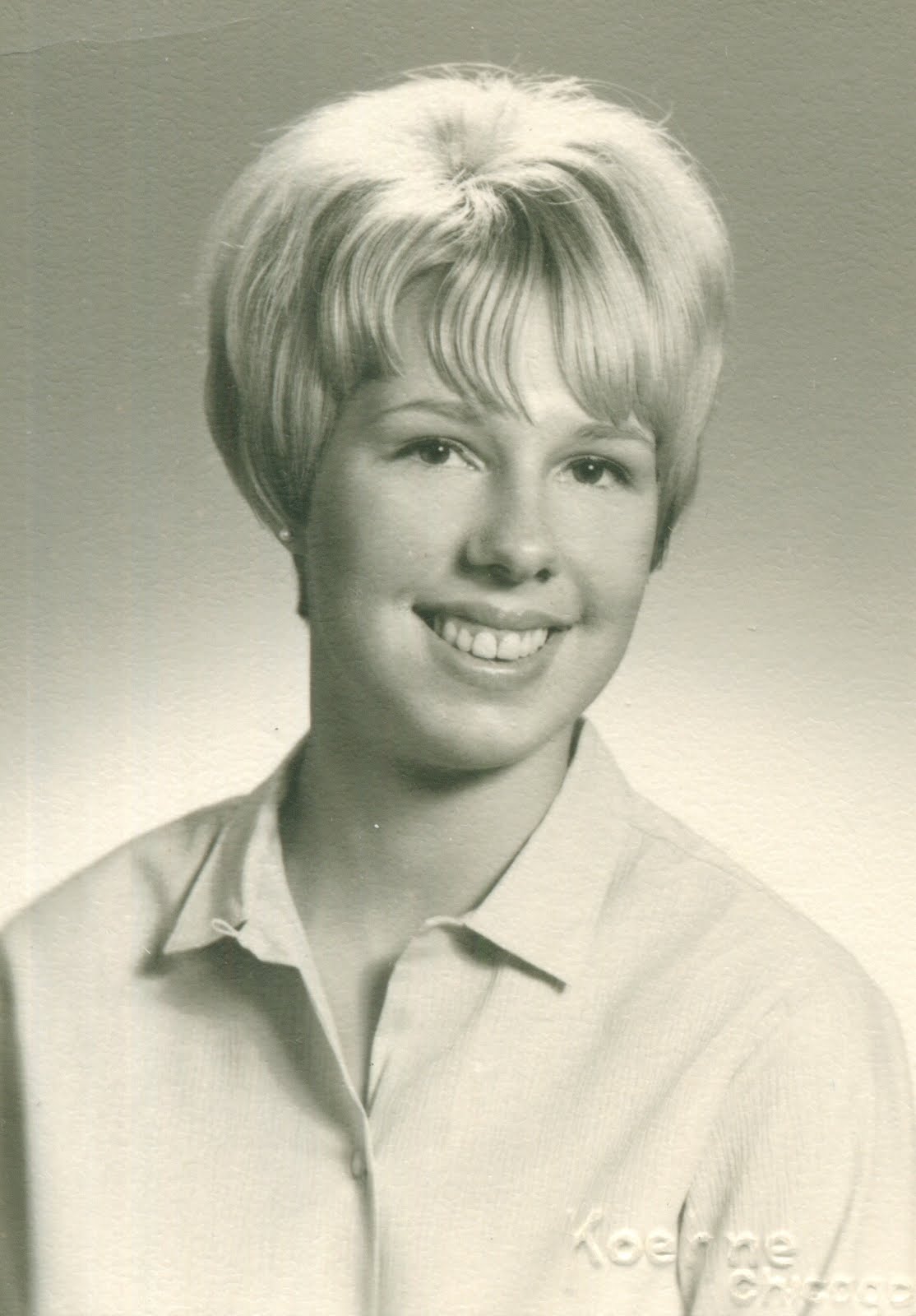
Here I am at 21 in my college graduation picture. Did I even think about my 70s when 30 still seemed like a somewhat strange and distant land? Perhaps not.


Every year a wave flowing into the next. At the same time this process of aging is like an undertow, not always seen but there nonetheless, a danger, a pull to an unknown place with no return. People my age, a little younger or a little older, are dying. Sometimes from long illnesses, sometimes suddenly. Decades ago my parents passed away, both suddenly from heart attacks at ages 74 and 77.  More recently (2009), Paula, a friend and once my partner, died suddenly at 59. Celebrities I remember growing up are now dead: Robin Williams, David Bowie, Leslie Gore, Natalie Cole, many more. Like everyone, I hear or read about fatal accidents. Of course, I’ve always known an accident is possible anytime, but older, I'm somehow more aware of the danger and the arbitrariness of it all.  Witnessing these deaths, I pause, promising myself to be more mindful, to make every day count.

Like other friends my age, I say sometimes that I wouldn’t choose to go back to my 20s even if I could. We agree that so many youthful worries have since been eased or abandoned. We’re stronger, freer, happier now. For those of us who are retired, there’s more autonomy than we had when jobs and/or growing families structured our days. It’s a kind of second adolescence, except we’re old enough to appreciate it. We don’t waste a minute sulking in our rooms. Five years after retiring from teaching English in Japan (a job and country I loved), I still wake up mornings, thrilled to be able to create my days pretty much as I like.

I’m also lucky to be aging along with the largest generation in US history: the post World War II baby boomers. Every month, when my AARP* magazine arrives, it’s full of stories about other people my age who are still in the game through their professions or making a new start in something. The cover of the latest issue includes these stories: Money Issue (get hired, best investments), Disrupt Aging, Choose Your Cruise, proactive health articles.


Surrounded by age-positive opportunities here in Denver, I take free Silver Sneakers exercises at my local YMCA, laugh with my laughter yoga friends (mostly older, as we meet in the middle of the day), and square dance with the Rainbeaus, a club known for having many senior members with playful spirits. Summers, when I return to my cabin in Florissant, I’m surrounded by enterprising seniors there too—hiking mountains, planting gardens, building stuff. The list goes on. A great time to be an old person. And yet this, from Emily Dickinson:

Presentiment is the long shadow on the lawn—
Indicative that suns go down—
Notice to the startled grass
That darkness is about to pass—

With this presentiment that time is getting shorter and the darkness is not all that far away, what still needs to be done? What can I still do? What do I really want to do? What should I do now while I’m able? Perhaps those youthful worries over how to create my future haven’t really gone away, just changed form, become more urgent. Thinking of my younger self, I shake my head with the other elders. What after all, did she have to worry about? She had youth!

“Aging sucks”, says my 84-year-old neighbor when I ask her about it. “I never thought about it until I got cancer.” Once a violinist and composer, she can no longer play because of arthritis in her fingers. She does her best to live on a very limited income. She's clearly not the only one. For two Decembers in a row I’ve helped deliver fruit baskets from Volunteers of America to seniors who are alone or financially poor in Denver, and have seen glimpses of the stresses endured by many seniors: failing health, loneliness, too little money for making ends meet. Many homeless people I see on the street are seniors.

Looking at my AARP magazine cover, I welcome everything that reinforces my sense of strength and agency. I need it to balance out my sense of vulnerability. A fall can lead to a broken bone which can lead to immobility and long recovery time, as happened to a friend in Florissant last year. (But our ability to heal is strength and my friend's neck brace was removed last week. Ah, freedom!) Other friends and family members are surviving cancer. Seeing their strength makes me feel stronger to meet whatever challenge comes my way.

 However, vulnerability is underscored every week when I visit a woman my age who has early-onset Alzheimers. I knew her before her illness and there seems to be flickers of our friendship in her long-term memory. This form of the disease is strongly linked to genetics, a time bomb hidden in a piece of DNA.  In offering caregiving services to her, I wonder about my own undiscovered vulnerabilities. “Just do what you can, make every day count”, I whisper to myself as the visit ends.

Memory is such a gift when and while we have it. When I was young, I thought it was a little sad to be old, to have most of life in the past. Okay, I had a point there. Unlike the past, the future always has hope and promise. I'm increasingly aware of how much of the future I'll never see.  But now I look at the past as a mansion, not quite Downton Abbey, rather much humbler, more complex, and very large. Mine has all sorts of rooms full of interest. A few rooms I’ve learned to keep closed; no need to revisit. As for the rest, wandering through them is a fascinating journey. I can go to any of them as the mood strikes: childhood rooms, classrooms, outdoor rooms, often alone or with others I’ve known and loved. Fun! As George Orwell said, “One’s memories grow sharper after a long lapse of time because one is looking at the past with fresh eyes and can isolate and as it were, notice facts which previously existed among a mass of others.” It’s fun to share these reminiscences with good friends who tell me about their own wanderings and new ways of seeing.

Still memory is always on a balance beam of strength and vulnerability. Just as maintenance of my body seems to take more time and work than before, so does memory. It always irritates me when my peers complain about not being able to remember names or where their keys or glasses are as if nothing can be done. Okay, it’s true--brain synapses slow down, but mindfulness and paying attention go a long way toward minimizing the problem, I argue. We can take notes or use one of many mnemonic techniques.   Just another exercise. Use those strengths. We can't abolish vulnerability but we can thumb our noses at it.

Speaking of strengths, it’s time to wet my toes in the current of today. Errands and more preparation for next week's trip to Japan. Yet there’s so much more to say about this and many other topics. Another day, another blog to come.