Showing posts with label Wisdom. Show all posts

Saturday, April 1, 2017

Thoughts on our daily walk with Death

We're always walking with Death--that's the truth built into the Buddhist acknowledgement of impermanence. Like so many,  I've gone through hours, days, weeks, months--giving D scarcely a thought, pushing the knowledge of my eventual demise to the back of my consciousness as I plunge into daily tasks and distractions.

There are always moments when the reality of impermanence breaks through--historical photos, for example. I feel a kind of poignance of looking at images of people going through their daily routines, seemingly oblivious to the preciousness of that fleeting moment. There are other times--reading obituaries and noting the age of the deceased. Is she older or younger?--as if that really had any relevance. Death can arrive anytime, anywhere, at any age; we all know that but tend to wince when reminded. And then there are other times--when someone I know dies. This month three deaths occurred in my immediate world. Shortly after the third one, my weekend Buddhist reading list came via an email from the magazine Lion's Roar. The article, "The Supreme Meditation" by Larry Rosenberg, focused on the theme of death. Although Western culture is structured to take us away from that awareness, he asserts, the key to living fully is embedded in keeping that awareness up front and center.

Of course, if death is always with us, it has many guises. I've passed a few frivolous moments imagining how often death would change his profile picture if he were on Facebook. I finally settled on an image that I saw on the cover of a children's book, Cry Heart But Never Break, featured in one of my favorite blogs. It's a gentle image; I so dislike horror.


The Buddhist tradition tends to be more in-your-face about it. This image, Zazen on Waves by Maruyama Okyo (1787), can be seen at Daijoji Temple in Hyogo, Japan.


Recently, visiting the Denver Public Library, I checked out The Five Invitations by Frank Ostaseski (Flatiron Books, 2017). I just finished it this morning and found it very useful--thought-provoking and well, calming. A teacher/caregiver who cofounded the Zen Hospice Project in San Francisco, Ostaseski interweaves stories of his experiences there with other examples of those five invitations, invitations to use death-awareness as a means of bringing us "closer to our truest selves". The invitations are: (1) Don't wait; (2) Welcome everything, push away nothing; (3) Bring your whole self to the experience; (4) Find a place of rest in the middle of things, and (5) Cultivate "Don't Know Mind". Click here for extended definitions of all of them.

As I attended two memorial services this month, I had a chance to think about these invitations and what they might have meant for those whose lives were honored. One of them was for Gerry S., the lawyer who gave me my first job when I came to Denver in 1976. He was an open-hearted man who at that time was just recently in recovery and discovering the joy of living without addiction. He had left a high-powered legal office to open his own practice. He was kind to me, offering a very relaxed work environment and passing on books and information about Colorado life. I think he knew how to live fully, especially within his large family and the AA community where he supported numerous others on the path to recovery. We lost touch after I left the job three years later. But now, decades later, when a mutual friend told me that he had passed away at the age of 87, I knew I wanted to attend his memorial and tell his widow how much his kindness had meant to me. I did that following a service at a small Anglican church in South Denver, packed with the many friends and family members who loved and missed him. I believe the stories and images showed a man who brought his whole self to the experience of living.

A week later I learned of the death of Angela S., one of my OLOC sisters. Dealing with a terminal cancer diagnosis, Angela entered home hospice after treatments were no longer useful. Shortly before her death at age 76, she married her longtime partner, Cindy. I was not prepared for the very powerful discovery I made at her memorial service, held at the Church of the Beloved in a suburb north of Denver. Angela, who had grown up Roman Catholic, was part of the Catholic Ecumenical Communion, a faith community that creates an inclusive environment for Catholics who accept the liturgy but not the restrictive politics of the Roman Catholic Church. Not surprisingly, it is not recognized by the establishment church. But it was through this faith community that Angela's family and friends could bring their whole selves to the experience of honoring her life at the ceremony, officiated by a minister who was also a woman. And we could all find a "place of rest" in the inclusivity in which Angela's spouse and commitment to her community could be fully recognized.

There has still been no memorial service for Joanne K., the 85-year-old former neighbor I had visited weekly before her death last month. Perhaps there has been or will be a service at the local Catholic church she attended. We had started a friendly-neighbor relationship during my last year living at Camellia House, one which probably would have ended when she moved last summer. However, shortly before the move, she was diagnosed with terminal cancer and given less than 6 months to live. Joanne also had a secret that she had told no one else: she had loved another woman in her youth, a woman who left her, and it seems I was the only one she could talk to about this. Alienated from her surviving brother, she kept her secret from the 3 women who formed her social circle. With others, she was closed, often seeming snobbish but perhaps just not sure how to relate after a lifetime of closure and focusing solely on her career in music. During my visits I hoped to create space for her to open and remember, but she did not choose that path. She wanted to "stop thinking about it." One day she broke a hip, then had surgery, then on to rehab, but was suddenly transferred to hospital when she developed an infection. She was hours away from death the last time I saw her. Hooked to various machines, she labored to breathe and I held her hand for awhile. A friend was coming to accompany her transfer to a long-term care facility that afternoon, so I left. She died alone early the next morning.

The memorial services for Gerry S. and Angela S. gave mourners some closure--and no doubt some reminder of our own mortality, of the invitation to live more fully in whatever ways we find meaningful--through friends, family and/or communities. I wonder how many others leave life as Joanne did, still unresolved about the events and people who disappointed them. May her memory rest in peace in the lives she left behind.

Saturday, January 14, 2017

New Year Resoluteness

I stopped making new year resolutions years ago.  A combination of reasons for that; tops on the list were a desire to avoid embarrassment at the likelihood of failure and a growing appreciation for the difficulty of changing a habit --however small. Gradually I learned that letting new things into my life bit by bit and then seeing where I wanted to take them was a much better approach. And so it is this year as well. That means life is more like this:


And less like this:


A major thing that I have let into my life since the November election is exploring ways to resist likely assaults from the Trump administration on human rights and the climate.  Have to confess I wish we had a sudden change away from all that, but it's not likely. And so I think about how to focus and stay committed for the long haul. Recently I found this graphic on my Buddhist newsletter (Lions Roar) from a teacher who made this mind map of the process.


The A section--Use "right effort"--has a plant-nurturing image, a perfect fit for me. Then there's B--Use "right mindfulness" to determine the situation, clarify intention, make a strategy, and determine what's needed to allow that to happen. Good stuff there, and I believe I've made some steps in that direction. Determining the dimensions of this resistance movement and making my own strategy should get a boost next week when I join the Women's March on Denver, a sister march to the massive one planned for D.C. on Jan. 21.

Open to everyone, these events are called women's marches because they were planned and organized by women. In Denver all of the speakers and performers are women, and you can find more about that, as well as any other aspect of this march and rally here. I expect that many ideas and strategies will be offered, and perhaps one of them will become mine. This week I'm spreading the word among friends and neighbors at my new address and inviting them to join me in traveling to Civic Center Park by bus that morning.

Meanwhile, I've been looking at how to keep balance in my life. See "C" on the mind map above. A major question is how will new activity find room in my life, which already seems quite full. I've realized that much as I enjoy Facebook, I don't need to access it every day or more than once a day, as I've been doing lately. I also don't need to feed fear and worry with reading endless speculative articles on the new regime's plans. I can better use my time on the day's chosen tasks.

Today's tasks in the spirit of "right effort": redesign my work space, write letters to two treasured friends, take a walk, laugh, make a big bowl of miso vegetable soup, and most important: post this blog, tell you, the reader, about the march and sending you my best wishes for a mindful, productive, joyful new year.


Friday, November 18, 2016

Moving toward resistance: the power of old women

Has it been just 10 days since our political frames were upended and Donald Trump became President-Elect? As with all disasters, it seems like I've been living with this knowledge so much longer. Like many of my friends and people around the world, I'm still somewhere along the continuum of grief*: denial, anger, bargaining, sadness/depression, and finally, acceptance. I supported Clinton, campaigned for her, and until her upset loss Nov. 8, expected her to win.

For the first few days after the election, the first three grief stages were dominant for me. Denial lasted only until late election eve, when Hillary Clinton's loss became a mathematical certainty. Anger followed--at everyone who voted for this ignorant, vulgar and dangerous man or who didn't vote at all. Bargaining didn't last long. I applaud those who are circulating petitions that the Electoral College be abolished or its members agree to vote for the popular vote winner (Clinton), and I would like to hope along with those who predicted DT would soon be impeached, yet I can't pin my hopes on either of those unlikely outcomes. So that leaves sadness, trying to move into acceptance, which of course is the precondition of resistance.

So why is grieving the word that fits our condition so well? I've certainly seen my candidates lose before, and I don't remember grieving. It was more like stumbling, picking myself up, dusting off my pants, and moving on. My string of losing candidates started with Nixon defeating Humphrey in my first election as a voter in 1968. A winner--a brief Democratic respite--emerged in the late 70s with Jimmy Carter, and then came a decade of Ronald Reagan, followed by Bush Sr.. We drew a winning ticket with Bill Clinton in the 90s, and then...George Bush Jr. for 8 years. Finally, Barack Obama won in 2008--the best win of all. I was in Japan then, and I remember calling my US election office to make sure my absentee ballot was on its way. A portrait of Obama hung in my office at school, the familiar one with the word "hope" printed underneath.

2016. The unthinkable arrived last week, which, when we parse out all of the factors, seems almost inevitable. The world turns, the backlash phenomenon reappears, and we are immersed in a media environment where truth and lies blur. "Post-Truth" was just named the Oxford Dictionaries' Word of the Year. (Click here for a discussion of that.) In earlier times, I recall recovering from defeat more quickly. One reason might be that for a big chunk of time, I put less faith than I do today in the electoral process as a source of change. Also, I was or felt young, with decades ahead to help turn the world around.

Like so many of my friends who are now old, I see my past as so much longer than my future. The likely damage from a Trump administration is frightening to contemplate. How much can be undone during my time on Earth? How much energy will I and my aging friends have to be part of the struggle? It was in that sad spirit that I drove to the monthly meeting of OLOC (Old Lesbians Organizing for Change), an event I join when I can. For the most part we're a support group, focusing less on marching and more on helping each other get through this thing called aging. We have potlucks, collect money for worthy groups, host visitors. Our most political effort recently has focused on activities helping us acknowledge and learn from differing communication and leadership styles. This Saturday we had set aside for a post-election discussion. "What would come of it?" I wondered as I walked in the door of the Northglenn Community Center.  This image below, which I found by googling "powerful old women, images", epitomizes my feeling about that day. I think it fits the tone of Saturday afternoon. We weren't smiling a lot, the two dozen or so of us who attended, but we took our places, looking into the future. And as this woman's hands show, we all brought a history of work in other times and places.


As our discussion began, our work on communication styles--as well as our long experience in different kinds of groups--paid off. We had excellent facilitators, Katherine and Trish, who guided us through three parts of the discussion: how we are feeling, why that is so, and what we hope to do. We agreed to guidelines: short speaking turns to allow everyone time to speak, respect for differences. Not surprisingly, our feelings were similar, and the grieving metaphor was invoked by many. We acknowledged fears and uncertainty about the future. Gillian brought information about the safety pin solidarity movement.


There was music: a song by Holly Near, and a Peter Paul and Mary old standby, Mr. Bigot. Brang brought copies of a short Buddhist text, which includes this phrase: "Greed, hatred and ignorance cause suffering. Let them go. Love, generosity and wisdom bring the end of suffering. Foster them." At several points, we remembered that we've gotten through hard times before, that wisdom and experience are valuable tools.

Moving into talk about what we can do, we were ready to begin the long work of resistance. Numerous ideas came up. One is to monitor and follow up on the actions of all of our Colorado representatives and senators in the US Congress, contacting and working with national OLOC, reconnecting with those working (still!) on the ERA (Equal Rights Amendment), and focusing in a number of ways on issues we feel passionate about.

We left the community center that afternoon, still grieving but ready to carry on. For me, I felt much more powerful than I did earlier. We may not walk as fast as we once did or stay up into the wee hours, but our wisdom and experience count for a lot. And we plan to use those.

*The 5 stages of grief listed above were first identified by Elisabeth Kubler-Ross in her 1969 book, On Death and Dying. For more discussion, click here.

Tuesday, August 23, 2016

Forty years ago: The Big Mama Rag newspaper collective


Forty years ago this fall I moved to Denver. In love with the natural beauty of the West and hoping to continue my fledgling feminist work in a newspaper collective, I joined the staff of Big Mama Rag in the fall of '76, just weeks after I moved here from Chicago. Ah, what a time it was! First of all, I was 29--gift enough, isn't it? And I wanted to live away from the Midwest where I had grown up, to start a new life in this high altitude city with its thin air, impossibly blue skies and open spaces.

I was still smoking then, often hand-rolled cigarettes. Here's what I looked like, circa 1980. Note my unlined face, blond hair (natural color!) and aviator sunglasses. Still fond of that style.


Within weeks of getting my first apartment, a studio at 16th and Marion, I was sitting in the basement of a large brick house on Gaylord Street, committing myself to working with women like me, those who saw second-wave feminism as the movement we wanted to join and grow. Big Mama Rag was a monthly newspaper, covering a wide range of feminist issues. We talked and wrote about so many things: the growing challenge and inclusion of women in many fields--law, literature, religion, politics; sexuality, violence against women and what should be done about it, racism, reproductive rights, a blossoming culture of art and music....So many others. We saw that patriarchy had controlled every aspect of women's lives for centuries, and we were determined to explore every aspect and to change it.

There were other feminist newspapers across the country, and we had exchange subscriptions with them, along with our sub to Liberation News Service, a wire service covering a range of progressive issues. We were part of a network, we felt, part of a growing movement that could make a difference. I have pictures and notes from that era, not yet organized, so let me share with you a photo retrospective of Big Mama Rag (BMR) by Julie Enszer, one that conveys the flavor of those change-driven days.

Here's what the paper looked like. An array of them, on display at a reunion of second-wave feminists in Denver this weekend:


Though we published just once a month, we met regularly, planning and writing stories. We kept prices low; we were all volunteers and we sold ads (usually from other movement groups and businesses) to cover costs. We were also a collective, which meant that we were committed to sharing power equally, although we all had different jobs, such as ads, the books, or distribution. It was the pre-Internet era, so once as month, we had a long production evening and night, cutting and pasting and huddling over the strip printer, a little machine that made headlines. The following morning, off it went to the printer.

Here's one photo from a late-70s production night; Vickie Piotter (looking quite alert despite the hour) with Deb Taylor in the background.


What made all of this possible was our youthful energy and the fact that one could live fairly cheaply in Denver then on a part-time or temporary job. (For a few years I did typing and reception for C. Gerald Starbuck, a lawyer. It was a laid-back office, and I remember having time to write stories for the paper between job tasks.) I stayed on the collective for about 18 months, then left, remaining a contributor.

I had friends on the collective, and by the early 1980s when the paper closed after 10 years of publishing, I had become disillusioned with BMR. Too much quarreling in the collective, I thought, and an increasing ideological rigidity that drove newcomers away. In retrospect, I didn't acknowledge the larger context: the Reagan years had begun, we were getting older and looking for new ways--more stable and responsible ways--of earning our living and making change; the well-known difficulties of attracting and keeping volunteers.

This weekend I had a chance to think about all of this again when Jackie StJoan, one of the first collective members , hosted a reunion of women who had worked on BMR or been friends in Denver during the late 70s. It was wonderful to see them again! I didn't know everyone well, as our time on BMR or other projects didn't always overlap, but there was such a shock of recognition. We had shared a common time and lived through decades of change. We were all older and wiser, quicker to praise than condemn.

Near the end of the evening, the poet Chocolate Waters, who had been part of the founding collective, cornered several of us to talk about our feelings about our movement work, then and now. She's thinking of doing a documentary, and this discussion was a kind of warm-up for that possibility. We had different memories and feelings about that time, of course, but a common thread it seemed to me was a kind of awe and pleasure that we had been active during this amazing time. For me, my criticisms of our mistakes or excesses took a back seat to our hopes and accomplishments.

Here are some photos from the reunion. Enjoying the company and potluck feast we created, from left:  Chocolate Waters, a long-time resident of New York City, continues to write and perform poetry; her best-known work from back in the day was a poetry collection called To The Man Reporter from The Denver Post. Next to her is Tea Schook, who did BMR finances in the late 70s and has been active in Democratic Party politics for many years. Third from left is Janet Yench, poet and initiator of Womanthology (1977), an anthology of Colorado women poets that she and I co-edited. At right is Gayle Novak, who lived with me in 1976-77 and patiently accepted the many hours I spent away from home and in the BMR office.


In this photo are two women active in promoting women's music and art in the late 70s/early 80s: Ronnie Storey (left) and Lyn Davis. Ronnie is a librarian in Colorado. Lynn was visiting from Vancouver Island, British Columbia, where she lives and teaches.


Here's our Big Mama Rag conversation group: from left, Jackie StJoan, a lawyer and retired judge living in Denver, Linda Fowler, visiting from North Carolina, Deb Taylor, a retired social worker living in Denver, Libby Comeaux of Denver, and Chocolate Waters.


Other women attended too, women who continue to do work that's important and close to their hearts. It was so good to spend Sunday afternoon with them, and as I write this on Tuesday evening, I'm still basking in the glow.

Monday, May 9, 2016

Laughing for no reason with Laughter Yoga

I'm enjoying a quiet morning indoors here in Florissant, looking out the dining room window at passing wildlife (raven, squirrel, deer)--and laughing. I just finished watching Day 130 of Dave Berman's Laugh of the Day on youtube. It's part of Daily Laughers, a channel Dave created for his daily 5--10 minute laughter sessions with Laughter Yoga teachers around the world. It's become part of my daily practice, and today I decided to do 3 sessions in a row, as I'm missing a session with the laughter club I'm part of in Denver. A great day to start the day--or in my case--put some energy into my mid-morning. I'm an early riser this week, as the cats I'm caring for expect their breakfast at 6:15, and being their devoted servant, I oblige.

Laughter Yoga is a practice, a way to benefit from the joy and healing power of laughter without need  of jokes or humor. It began with Dr. Madan Kataria in India 21 years ago and has since expanded into thousands of laughter clubs throughout the world. Dr. Kataria's great insight was the fact that laughing for no reason can produce the same physical and mental effects as laughing at a joke: increased endorphins (pleasure-inducing chemicals in the brain),  bonding with community (oxytocin) and all of the other positive effects of letting go of stress. The yoga part of the practice started with Dr. Kataria's wife, Madhuri, a yoga teacher who believed that yoga's breathing, meditative and spiritual aspects had a place in this healing art. Laughter yoga sessions often end with quiet time and a reflection on spreading world peace through laughter.


Over time I've gotten to know the friends I met through my laughter club, and part of the fun each Monday is going out to lunch afterwards to talk and, well, laugh some more. I first discovered Laughter Yoga toward the end of my stay in Japan when my friend Denise Olivieri took me to a World Laughter Day in Tokyo. (Yes, there is such a thing! First Sunday in May every year.) There I was with dozens of others simply laughing for no reason via a variety of short (a minute or so) exercises. Breathing, clapping, laughing--those are the elements of Laughter Yoga. Here's an example of a laughter yoga session on Youtube.  No doubt one laugh equals 100 words or more. You can watch this 3-minute clip here.

When I moved back to Denver two years ago I found an on-going club which meets weekly at noon at the Unitarian Church at 14th and Lafayette.* The number of participants varies from just a few to perhaps 15, depending on everyone's schedule or inclination. There is no fee or need to sign up for a course. Starting in June, the group moves to nearby Cheesman Park and continues there until fall.

Here we are one morning in the upstairs room at the church, where the stained glass window creates a beautiful light.


As this blog is part memoir, I wonder, as I write, how my laugh has changed since I was a child. I remember taking a voice class once and being told "Your voice is not your voice. It's a collection of habits, mostly unconscious, that you have heard and adapted." I imagine the same is true of laughter. I have no videos or other recordings of my earlier selves laughing. Probably, as a young child, my laughs and giggles were a lot more spontaneous, but then came my teen years and an infusion of self-consciousness. If laughter reflects our self-confidence, our emotional depth and sense of freedom, then I know my laugh is stronger and freer now than it was during my more timid adolescence.

Laughter yoga has its offshoots and one of them is Laughter Wellness, developed by Sebastien Gendry, a laughter specialist, I guess you could say, based in California. He started Laughter Online University, through which you can get certification in leading Laughter Wellness groups. I enrolled this year, and my goal this month is to finish the program. When I return to Florissant in June, I'd like to bring more laughter skills with me and lead a session or two here. I led my first session in Japan when I returned for a visit in March. It was at the annual retreat of WELL (Women Educators and Language Learners), a group very dear to my heart. About 20 participants turned up for a 9 a.m. session and I was delighted with their enthusiasm and creativity. Later I visited Denise--the friend who had introduced me to LY--and I visited a Tokyo laughter club (see info below). Here we are looking a bit flushed and relaxed after that session.


*Anyone interested in finding a laughter yoga club in your country/area can go to this website. A great source in Japan is Mary Tadokoro. She and her husband are experienced laughter yoga trainers in Tokyo. You can reach her via the Kichijoji Laughter Club. The link for Laughter Online University is here. There are also a growing number of Skype laughter clubs in various countries. You can get the call times at this link. What a way to travel--hohohahaha!


Saturday, February 27, 2016

A few thoughts on turning 69

I turned 69 this month, which means I’ve started my 70th year of life. It was not so much a plunge into a new decade as a swirling of a toe in its waters. I’m in the habit of getting ready for birthdays at least 6 months in advance, so when the day actually arrives, my new age seems just a slight shift on the calendar, a new number on a form. When I was younger, old age really seemed like a foreign country. I sang along with Simon and Garfunkel. You know, that song about two old men sitting like bookends on a park bench; “how terribly strange to be 70.” Simon and Garfunkel wrote the song in their 20s, when that foreign country was still so far away for them. Since then, they've arrived, as have I, and perhaps they'd agree it’s not so strange after all. There are people and buildings and nature, more or less different from the ones you knew, but not as disorienting as you feared. So you walk ashore and the journey continues.

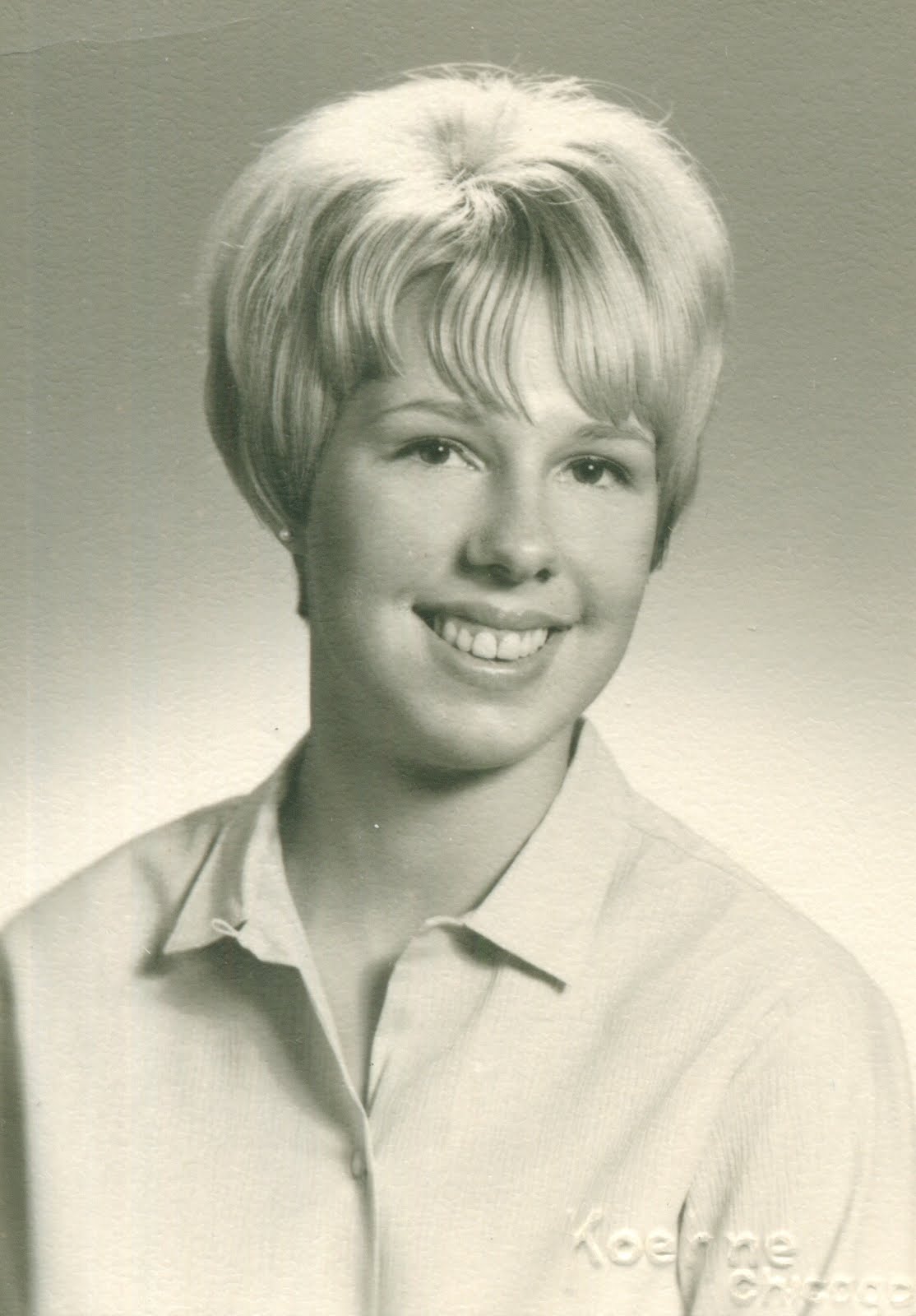
Here I am at 21 in my college graduation picture. Did I even think about my 70s when 30 still seemed like a somewhat strange and distant land? Perhaps not.


Every year a wave flowing into the next. At the same time this process of aging is like an undertow, not always seen but there nonetheless, a danger, a pull to an unknown place with no return. People my age, a little younger or a little older, are dying. Sometimes from long illnesses, sometimes suddenly. Decades ago my parents passed away, both suddenly from heart attacks at ages 74 and 77.  More recently (2009), Paula, a friend and once my partner, died suddenly at 59. Celebrities I remember growing up are now dead: Robin Williams, David Bowie, Leslie Gore, Natalie Cole, many more. Like everyone, I hear or read about fatal accidents. Of course, I’ve always known an accident is possible anytime, but older, I'm somehow more aware of the danger and the arbitrariness of it all.  Witnessing these deaths, I pause, promising myself to be more mindful, to make every day count.

Like other friends my age, I say sometimes that I wouldn’t choose to go back to my 20s even if I could. We agree that so many youthful worries have since been eased or abandoned. We’re stronger, freer, happier now. For those of us who are retired, there’s more autonomy than we had when jobs and/or growing families structured our days. It’s a kind of second adolescence, except we’re old enough to appreciate it. We don’t waste a minute sulking in our rooms. Five years after retiring from teaching English in Japan (a job and country I loved), I still wake up mornings, thrilled to be able to create my days pretty much as I like.

I’m also lucky to be aging along with the largest generation in US history: the post World War II baby boomers. Every month, when my AARP* magazine arrives, it’s full of stories about other people my age who are still in the game through their professions or making a new start in something. The cover of the latest issue includes these stories: Money Issue (get hired, best investments), Disrupt Aging, Choose Your Cruise, proactive health articles.


Surrounded by age-positive opportunities here in Denver, I take free Silver Sneakers exercises at my local YMCA, laugh with my laughter yoga friends (mostly older, as we meet in the middle of the day), and square dance with the Rainbeaus, a club known for having many senior members with playful spirits. Summers, when I return to my cabin in Florissant, I’m surrounded by enterprising seniors there too—hiking mountains, planting gardens, building stuff. The list goes on. A great time to be an old person. And yet this, from Emily Dickinson:

Presentiment is the long shadow on the lawn—
Indicative that suns go down—
Notice to the startled grass
That darkness is about to pass—

With this presentiment that time is getting shorter and the darkness is not all that far away, what still needs to be done? What can I still do? What do I really want to do? What should I do now while I’m able? Perhaps those youthful worries over how to create my future haven’t really gone away, just changed form, become more urgent. Thinking of my younger self, I shake my head with the other elders. What after all, did she have to worry about? She had youth!

“Aging sucks”, says my 84-year-old neighbor when I ask her about it. “I never thought about it until I got cancer.” Once a violinist and composer, she can no longer play because of arthritis in her fingers. She does her best to live on a very limited income. She's clearly not the only one. For two Decembers in a row I’ve helped deliver fruit baskets from Volunteers of America to seniors who are alone or financially poor in Denver, and have seen glimpses of the stresses endured by many seniors: failing health, loneliness, too little money for making ends meet. Many homeless people I see on the street are seniors.

Looking at my AARP magazine cover, I welcome everything that reinforces my sense of strength and agency. I need it to balance out my sense of vulnerability. A fall can lead to a broken bone which can lead to immobility and long recovery time, as happened to a friend in Florissant last year. (But our ability to heal is strength and my friend's neck brace was removed last week. Ah, freedom!) Other friends and family members are surviving cancer. Seeing their strength makes me feel stronger to meet whatever challenge comes my way.

 However, vulnerability is underscored every week when I visit a woman my age who has early-onset Alzheimers. I knew her before her illness and there seems to be flickers of our friendship in her long-term memory. This form of the disease is strongly linked to genetics, a time bomb hidden in a piece of DNA.  In offering caregiving services to her, I wonder about my own undiscovered vulnerabilities. “Just do what you can, make every day count”, I whisper to myself as the visit ends.

Memory is such a gift when and while we have it. When I was young, I thought it was a little sad to be old, to have most of life in the past. Okay, I had a point there. Unlike the past, the future always has hope and promise. I'm increasingly aware of how much of the future I'll never see.  But now I look at the past as a mansion, not quite Downton Abbey, rather much humbler, more complex, and very large. Mine has all sorts of rooms full of interest. A few rooms I’ve learned to keep closed; no need to revisit. As for the rest, wandering through them is a fascinating journey. I can go to any of them as the mood strikes: childhood rooms, classrooms, outdoor rooms, often alone or with others I’ve known and loved. Fun! As George Orwell said, “One’s memories grow sharper after a long lapse of time because one is looking at the past with fresh eyes and can isolate and as it were, notice facts which previously existed among a mass of others.” It’s fun to share these reminiscences with good friends who tell me about their own wanderings and new ways of seeing.

Still memory is always on a balance beam of strength and vulnerability. Just as maintenance of my body seems to take more time and work than before, so does memory. It always irritates me when my peers complain about not being able to remember names or where their keys or glasses are as if nothing can be done. Okay, it’s true--brain synapses slow down, but mindfulness and paying attention go a long way toward minimizing the problem, I argue. We can take notes or use one of many mnemonic techniques.   Just another exercise. Use those strengths. We can't abolish vulnerability but we can thumb our noses at it.

Speaking of strengths, it’s time to wet my toes in the current of today. Errands and more preparation for next week's trip to Japan. Yet there’s so much more to say about this and many other topics. Another day, another blog to come.

Tuesday, October 13, 2015

Healing connections at Tierra Sagrada

Yesterday the City of Denver joined a growing number of cities that have declared October 12 Indigenous Peoples' Day. In a year that saw the removal of the Confederate flag from many public places, the celebration of Columbus Day is being deconstructed as well. A long overdue event! The anniversary of the so-called "discovery" of America by Christopher Columbus has now been reframed as a day to acknowledge the tragedy that ensued for Native Americans after the European conquest and a day to celebrate their cultures. Therefore, it seems like a good time to write about a neighbor, who lives five miles down the road from me. She honors indigenous cultures just about every day of the year. Her name is Patricia J. (Pati) Turner and she is the founder of the Tierra Sagrada Foundation.

I met Pati several years ago after I retired from teaching and returned to Colorado. I learned then that she's a retired marine scientist from California and that she was looking for land in this area to follow what has become her new life's calling--honoring the wisdom of indigenous cultures. Eventually, she bought an 8-acre forested parcel in the Echo Valley Subdivision of Florissant and began making that place a center for healers and artists from different indigenous traditions. She called her place and foundation Tierra Sagrada, which means sacred earth. The foundation is a non-profit "dedicated to the conservation of indigenous cultures, protection of their territories, and preservation of their wisdom". In an article she wrote for the September issue of The Ute Country News, she quotes a Kallallit Eskimo Shaman from Greenland, who believes the greatest goal in the world "is to melt the ice in the heart of man". The greatest distance in the existence of humankind is not a matter of land geography, he says. Rather, it's the distance "from his head to his heart." Our task is to bridge that gap if we wish to know "our own immensity within". This way of thinking resonates with me.

Pati has sponsored guests from various countries over the years, offering workshops, sweat lodges,  initiations, or festivals. Although I joined her mailing list and read about her programs, I never attended one apart from an evening fire circle in 2010. Sometimes the dates didn't work for me, but even when they did, I felt that working with shamans wasn't, well,  quite my thing. I'm more of a politico in my approach to ideas and social change.

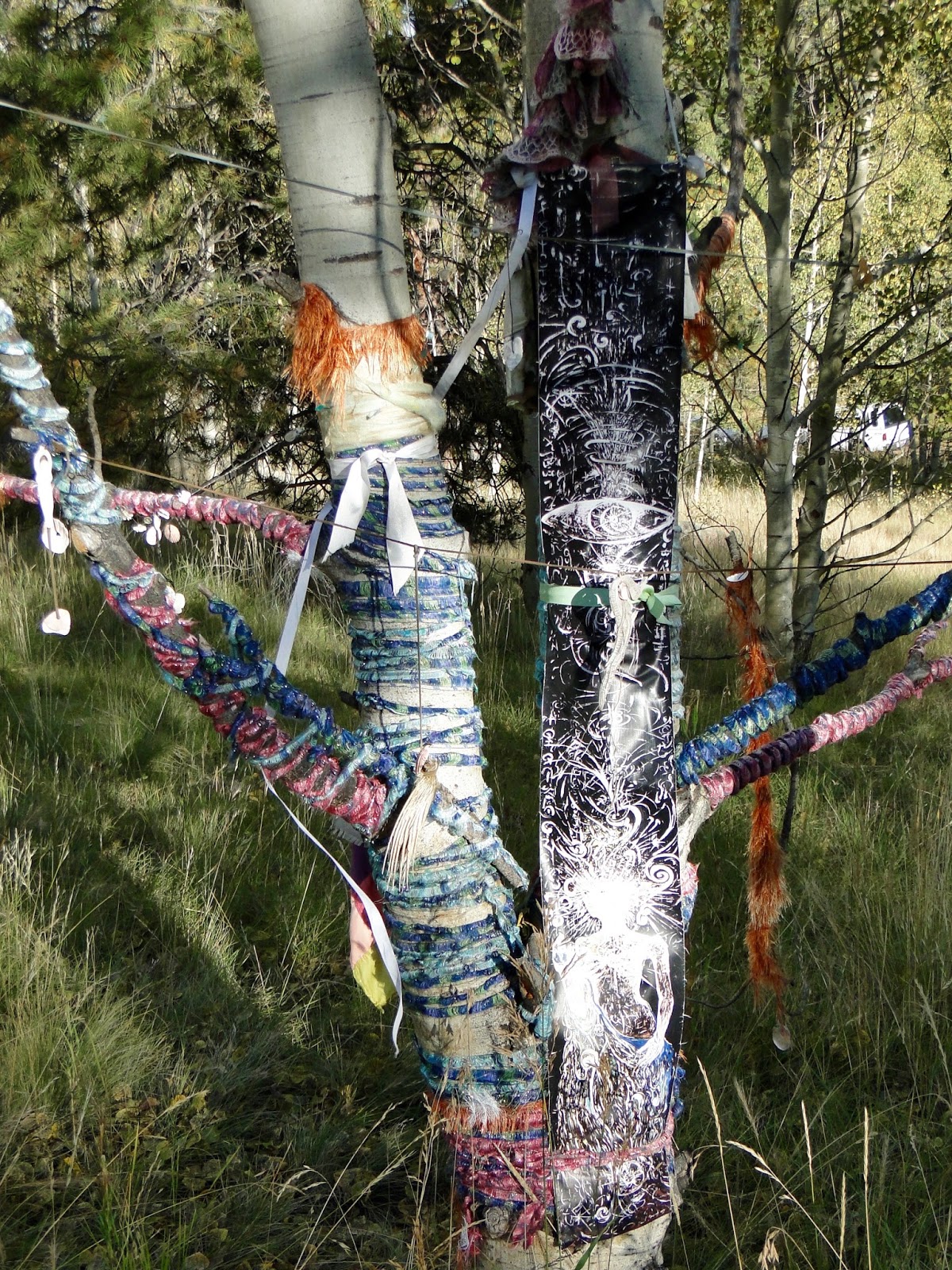
Then, last month,  came notice of Music and Magic in the Mountains festival last, and I decided to visit Tierra Sagrada and get a sense of what it's all about. The day included music of all kinds, artisan booths, a small blessing ceremony led by Pati, and various workshops, mostly related to healing or dance. Some sessions took place in Pati's house, but most things were outdoors on that beautiful autumn day. Two friends from Denver joined me, along with local friends Linda and Barbara, and the day proceeded as a festival day should: lots of time to set up lawn chairs, eat our picnic lunches, watch kids and dogs, listen to music, and chat with artisans. Wandering down to a food truck for a bowl of hemp broccoli soup, I spied a hammock from which I could gaze at the aspens, and nearby, a beautifully-decorated tree.


I think I realized then that participating in events there had nothing to do with "believing" or not believing in shamans. It had more to do with just being open: open to different forms of wisdom and beauty and healing. It's not an intellectual process, but rather one of spirit. You can see that in this photo of Pati (from her website) and feel it when you meet her.


Pati was introduced to this path she's chosen through the anthropology courses she took when she returned to college in mid-life. She became deeply interested in ancient cultures, especially the Huichol people of Mexico, with whom she spent short periods of time during her college years. She was impressed with the joy she experienced in their community--one with no running water or other Western amenities. In contrast, she says, those of us brought up in consumer culture often experience stress and disconnection rather than joy.

I'd love to visit Tierra Sagrada again soon, and events are scheduled this month and in November. But this week I'm going back to Denver, where I live most of the year. Next summer, when I hope to return to my cabin for most of the season,  I will make time for a return visit. Meanwhile, thanks to Pati, I feel more sensitized to the opportunities around me for connecting with the wisdom of indigenous cultures.

In Denver, there's a monthly indigenous film showing at the Museum of Science and Nature, and I attended several last year. The Internet has brought other opportunities. This year I've been following Honor the Earth, an organization founded by Winona LaDuke and friends/allies to unite Native communities in working for energy justice and protecting their lands from fossil fuel pipelines. There are a number of ways to contribute to their efforts, such as buying the wild rice they harvest. (I'm already preparing for Thanksgiving!) Also in Denver are the state's majority Native American population: 56,000 people if you count those who identify solely as American Indian/Alaskan Native, or nearly twice that if you consider those of mixed race heritage. I should have many opportunities to participate in the struggles, ceremonies, wisdom and art they share.

I'll close with some words from Thoreau--my favorite person to quote--in Walden.* Thoreau had a strong aversion to housework and the tendency of humans to cling to heaps of possessions. He especially admired the customs of the Mucclasse Indians, who had a yearly "custom of the busk" in which they burned all their old possessions (having previously gotten a modest number of new ones). After 3 days of fasting and abstinence, the fire was extinguished, a general amnesty was called permitting all "malefactors" to return to town. And then came the feast of new corn and fruits, which involved 3 days of feasting and dancing and singing. Mercifully, they had no plastic.

Such wisdom there is in downsizing--always an ongoing process for me, when it's a celebration rather than just a list of chores. No doubt some ideas for prison reform in there too.

*Thoreau admired Native American culture a great deal, and there are more than 50 references to it in Walden.